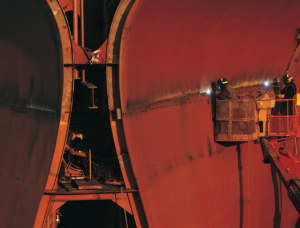
Selecting a welding camera for tanks and pipelines involves more than finding the smallest camera available. Welding environments vary considerably, from large storage tanks and pressure vessels to narrow-gap joints inside pipelines. Each application presents different challenges related to accessibility, viewing angle, lighting, and installation space.
Choosing the appropriate camera depends on understanding where the weld is located, how it will be monitored, and how much space is available around the welding process. A camera that performs well inside a pressure vessel may not be suitable for narrow-gap welding, just as an ultra-miniature camera may not be necessary for every confined-space application.
Mecaweld offers both the Micro Series M2-200H-M15 and the Nano Series Borescope Welding Vision Camera, each designed to solve different inspection challenges while improving weld visibility and process control.
Key Takeaways
- Different confined welding applications require different camera configurations.
- Camera diameter, viewing angle, and illumination all influence inspection performance.
- The Micro Series is designed for confined spaces where direct weld observation is required.
- The Nano Series is intended for extremely restricted installations where conventional cameras cannot fit.
Why Camera Selection Matters
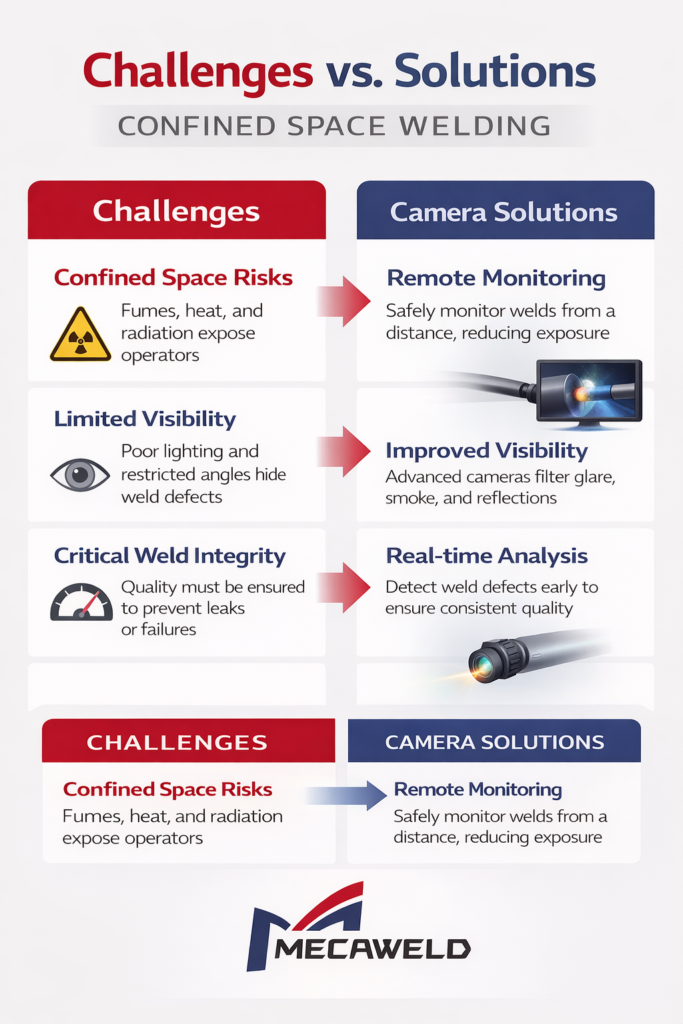
Confined-space welding presents a wide range of inspection challenges. While tanks, vessels, and pipelines are often grouped together, the available installation space can differ significantly from one application to another.
For example, a pressure vessel may provide enough clearance for a compact camera mounted near the weld, whereas narrow-gap welding inside a pipeline may only accommodate a few millimeters of available space.
Selecting the wrong camera can limit visibility, complicate installation, or prevent effective monitoring altogether. Considering camera size, viewing direction, and illumination during system design helps ensure reliable weld observation throughout the welding process.
Comparing Mecaweld’s Welding Camera Solutions
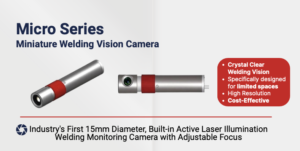
Micro Series M2-200H-M15
The Micro Series is intended for confined welding environments where a compact camera provides sufficient access without compromising image quality.
Its 15 mm camera head is available with two viewing configurations:
- 0° forward-view for direct observation of the weld pool
- 90° side-view for applications such as resistance cladding, pipe interiors, and cylindrical welds
The larger camera diameter allows high-definition imaging while remaining compact enough for many confined welding applications.
Typical applications include:
- Tank welding
- Pipeline interiors
- Pressure vessels
- Resistance cladding
- Automated welding cells
Nano Series Borescope Welding Vision Camera
The Nano Series is designed for applications where installation space is extremely limited.
Its modular configuration features the world’s first smallest borescope welding monitoring camera, using a 4.8 mm diameter camera head with an external active laser illumination system. This design enables installation inside narrow-gap welding torch bodies and other restricted locations.
For applications requiring an integrated design, the Nano Series is also available with an ultra-miniature 6 mm camera head with built-in laser illumination, simplifying installation while maintaining excellent weld visibility.
Nano-Second Pulse Gating (NSPG) technology minimizes arc interference, allowing operators to monitor welds in challenging environments with smoke, reflections, or intense arc brightness.
Typical applications include:
- Narrow-gap welding
- Precision fabrication
- Aerospace assemblies
- Nuclear welding
- Automated welding torches
Choosing the Right Camera for Your Application
The appropriate camera depends on both the available installation space and the welding process.
| Application | Recommended Camera |
|---|---|
| Tank interiors | Micro Series |
| Pressure vessels | Micro Series |
| Pipeline welding | Micro Series or Nano Series (depending on access) |
| Resistance cladding | Micro Series (90° lens) |
| Narrow-gap welding | Nano Series |
| Welding torch integration | Nano Series |
| Extremely confined spaces | Nano Series |
Rather than selecting the smallest camera by default, manufacturers should choose the camera that provides the best balance between accessibility, viewing angle, and image quality.
Installation Considerations
Camera performance depends not only on the camera itself but also on how it is integrated into the welding system.
Several factors should be considered during installation:
- Available mounting space
- Viewing direction (0° or 90°)
- Cable routing
- Heat exposure
- Working distance
- Illumination requirements
- Accessibility for maintenance
Planning these factors during system design helps ensure stable monitoring without interfering with the welding operation.
Supporting Reliable Weld Inspection
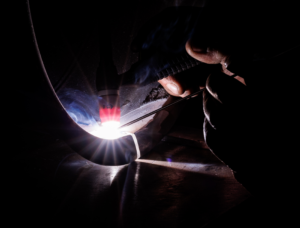
Real-time weld monitoring allows operators to observe weld pool behavior throughout the process rather than relying solely on post-weld inspection.
Continuous visibility helps identify changes in arc stability, weld bead formation, and process consistency before defects require corrective work. When integrated into automated welding systems, cameras also provide valuable documentation for quality assurance and process optimization.
To learn more about improving welding quality, read:
For additional welding vision solutions, visit: https://mecaweldusa.com/products/
Conclusion
Choosing the right welding camera involves more than selecting the smallest available system. Different welding environments require different combinations of camera size, viewing angle, illumination, and installation flexibility.
The Mecaweld Micro Series and Nano Series were developed to address distinct confined-space inspection challenges. Whether monitoring welds inside pressure vessels, pipeline systems, resistance cladding applications, or narrow-gap joints, selecting the appropriate camera helps improve visibility, supports consistent weld quality, and enables more reliable inspection throughout the welding process.
FAQ
What is the best welding camera for tanks and pipelines?
The best camera depends on the available installation space. The Micro Series is suitable for many confined welding environments, while the Nano Series is designed for extremely restricted spaces.
When should I use the Micro Series instead of the Nano Series?
The Micro Series is recommended when a 15 mm camera can be accommodated and a forward or side-view perspective is required. The Nano Series is intended for installations where only a few millimeters of clearance are available.
What is the advantage of a 90° welding camera?
A 90° viewing angle allows operators to monitor welds from the side, making it particularly useful for resistance cladding, pipe interiors, and cylindrical welding applications.
Why is camera size important in confined-space welding?
Camera diameter determines where the monitoring system can be installed. Smaller cameras provide access to restricted areas while maintaining visibility throughout the welding process.
Source
American Welding Society (AWS) – Welding processes and inspection guidance