Industries such as oil & gas, chemical processing, power generation, and water treatment depend heavily on tanks, vessels, and pipeline systems. In these environments, welding is often performed in confined or restricted spaces where visibility is limited and working conditions are demanding. Welding cameras tank vessel pipeline welding applications have become increasingly important because even small defects can lead to leaks, system failure, or unplanned shutdowns.
Conventional inspection methods tend to fall short in these conditions. Operators may not have a direct line of sight to the weld, and post-weld inspection alone does not prevent defects from occurring in the first place. Welding cameras address this gap by providing continuous visibility during the welding process itself, allowing issues to be identified earlier and corrected before they escalate.
Key Takeaways
• Welding cameras provide direct visibility in confined tank, vessel, and pipeline environments
• Remote monitoring reduces exposure to heat, fumes, and arc radiation
• Real-time observation helps identify weld defects before they progress
• Compact camera systems enable inspection in areas that are otherwise inaccessible
Why Welding in Tanks, Vessels, and Pipelines Is Challenging
Confined Working Conditions
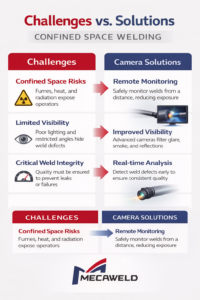
Welding inside tanks or pipelines restricts movement and limits access. These environments can trap heat and fumes, making it more difficult for operators to maintain consistent control throughout the weld.
Limited Visibility
In many cases, the weld area cannot be viewed directly. Operators may rely on indirect angles or partial visibility, which increases the likelihood of missing early-stage defects such as porosity or incomplete fusion.
High Consequence of Failure
Unlike general fabrication, weld failures in pipelines or pressure vessels carry significant risk. A single defect can compromise system integrity, resulting in leaks, downtime, or safety hazards.
How Welding Cameras Improve Confined Space Welding
Direct Process Visibility
Welding cameras provide a clear view of the weld pool and arc behavior, even in environments affected by smoke or reflection. This makes it easier to monitor weld consistency while the process is ongoing.
Safer Monitoring Conditions
Instead of remaining positioned close to the arc, operators can observe the welding process remotely. This reduces exposure to hazardous conditions without sacrificing visibility.
Continuous Feedback
Live and recorded footage allows teams to review weld performance during and after the operation. Issues can be identified as they develop, which reduces the likelihood of defects continuing through the weld.
Compatibility with Automation
In pipeline and vessel fabrication, welding is often automated. Cameras can be integrated into these systems to maintain visibility in areas that are difficult to access manually.
Mecaweld Solutions for Confined Space Welding
Mecaweld has developed camera systems specifically for these kinds of environments.
Micro Series (M2-200H-M15)
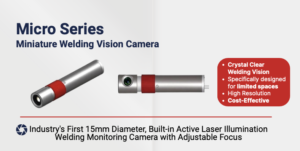
Designed for confined welding access, this 15mm camera can be positioned close to the weld area. The 0° and 90° lens options allow both forward and side observation inside pipes and tanks.
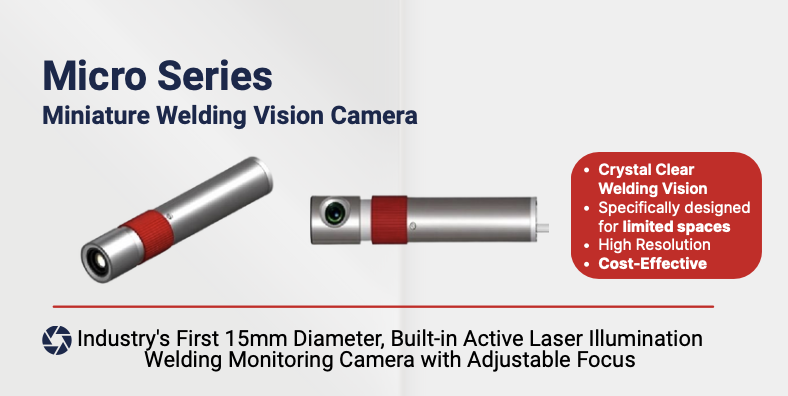
The Micro Series is designed for situations where standard cameras cannot be positioned close enough to the weld.
• 15mm diameter for confined access
• Available in 0° forward-view and 90° side-view configurations
• Suitable for pipeline interiors, tank welding, and resistance cladding
Its compact size allows it to be placed directly within restricted welding environments.
Nano Series Borescope Welding Camera
With a 4.8mm diameter, the Nano camera is suited for extremely tight spaces. It maintains visibility in environments where smoke, reflection, and arc intensity typically limit inspection.
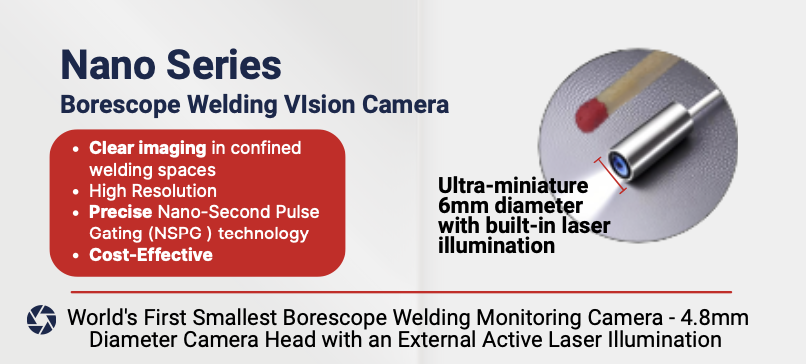
The Nano Series is intended for extremely tight welding spaces where even small cameras may not fit.
• 4.8mm diameter for narrow access points
• Nano-second pulse gating reduces arc interference
• Maintains visibility in reflective and smoke-heavy conditions
This makes it well suited for narrow gap weld inspection in tanks and vessels.
Applications Across Industry
Oil and Gas Pipelines
Camera monitoring supports weld consistency across long pipeline systems where inspection access is limited.
Pressure Vessels
Weld seams can be observed more clearly, improving reliability in high-pressure applications.
Storage Tanks
Maintaining weld quality helps prevent leaks in chemical and fuel storage environments.
Power and Nuclear Facilities
Remote monitoring reduces operator exposure in high-risk or restricted areas.
To learn more about weld quality and its impact on performance, visit:
https://mecaweldusa.com/blog/the-importance-of-welding-quality/
Final Thoughts
Welding inside tanks, vessels, and pipelines introduces constraints that are not present in open fabrication environments. Limited access, restricted visibility, and higher safety risks all make process control more difficult.
Welding cameras address these challenges by providing direct visibility, supporting safer monitoring conditions, and enabling earlier detection of defects. Systems such as Mecaweld’s Micro and Nano Series allow operators to observe welds in areas that would otherwise remain inaccessible, improving both reliability and efficiency.
FAQ
What are welding cameras used for in tank and pipeline welding?
They allow operators to monitor weld quality in real time, helping identify defects before they affect the integrity of the pipeline.
Why are welding cameras important in confined spaces?
They provide visibility where direct observation is not possible, reducing reliance on post-weld inspection alone.
What is the advantage of Micro and Nano welding cameras?
Micro cameras are suited for confined spaces, while Nano cameras are designed for extremely tight environments where access is more limited.
Can welding cameras reduce rework?
Yes. By identifying issues during the welding process, they help prevent defects from progressing, which reduces the need for rework.